
How To Choose a Fitness Tracker
Fitness Trackers are essentially watches that measure heart rate and calories burnt. In addition, a fitness tracker will provide detailed statistics when connected to your smartphone via Bluetooth or WiFi. All this while maintaining maximum comfort when moving - fitness trackers with a GPS chip measure distance and speed and display them in real time on the screen. Fitness trackers that don’t come with a chest strap can detect your heart rate directly from your wrist. So how to choose the right one for you?
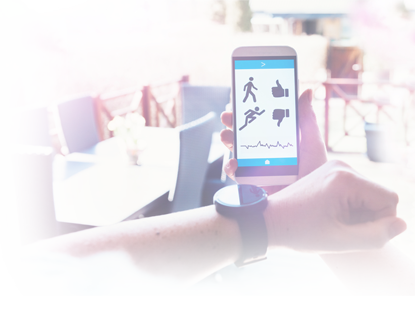
How to choose a fitness tracker. Some tips:
-
Choosing the right fitness tracker will depend on what you are going to be using it for and during which sport(s).
-
Consider the use of specialized functions for running, swimming, cycling, etc.
-
If your phone bothers you when doing sport, choose a fitness tracker with a GPS or a pedometer.
-
Fitness trackers with a chest strap are usually a bit cheaper.
-
If wearing your fitness tracker on your chest isn’t for you, just one you can wear on (and will measure your heart rate directly from) your wrist.
How to choose a fitness tracker? Frequently asked questions:
Should I choose a fitness tracker for running? For swimming? Or Cycling?
What makes a fitness tracker better than a fitness band?
Fitness bands are used for basic monitoring of daily movement and sleep. Their main purpose is to get you active.
Fitness trackers have more functions. They store detailed statistics and analysis in their internal memory and can calculate a training plan according to your heart rate. The displayed information can be personalized and set. However, they tend to be more expensive than fitness bands.
For more detailed information, read how fitness trackers and bands can help get you in shape.
What makes a fitness tracker better than a smart watch?
Smart watches are primarily an extension of your phone worn on the wrist and they tend to operate using applications. But sports features are not their priority; they alert you to new messages or incoming calls, display events from your calendar, etc. They can only be used for sports through running applications such as Endomondo, Runstastic or Nike Run Club.
Most fitness trackers use their built-in GPS to measure current and average speed, tempo, distance, etc. Statistics and measurements tend to be more accurate and have more sports-related functions. You can choose which information you wish to be displayed so that you can have a detailed overview of your specific training.
Is a fitness tracker with a GPS or a foot sensor better?
Fitness trackers with GPS
The GPS is usually built into the fitness tracker. If not, you need to have an external component or smartphone with you.
Fitness trackers with a foot sensor
Just attach the foot sensor to the shoe and run. You won’t even know it’s there.
What is maximum heart rate and how do I find out mine?
Women: 209 – (0.9 × age)
Men: 214 – (0.8 × age)
This calculation is about 90% accurate.
How do fitness trackers measure heart rate?
Fitness trackers with a chest strap
Sensor measurement
Can fitness trackers also be used in gyms or sports halls?
Where do fitness trackers store the data they gather? Am I not going to lose it?
Is it worth investing in branded fitness trackers like Garmin, Polar or Sigma?
Cheap sports testers
Branded fitness trackers
Fitness tracker brands:
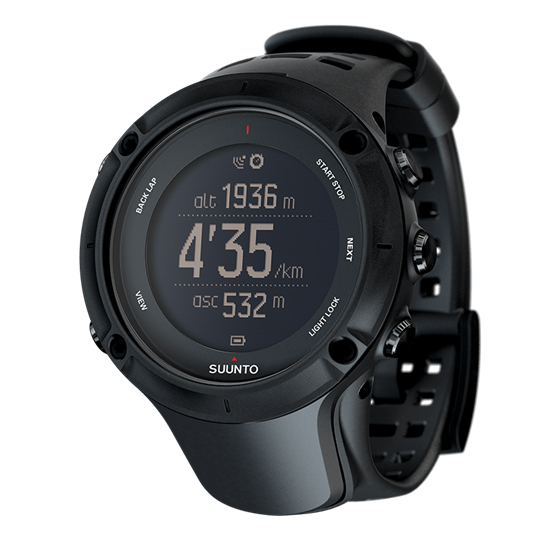
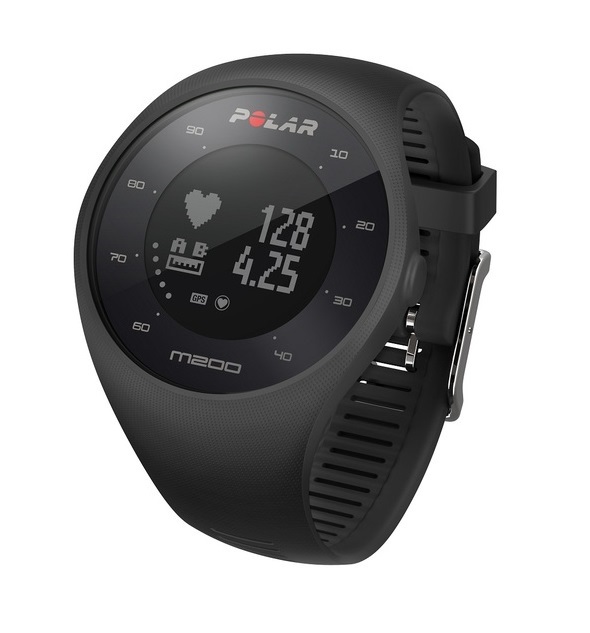
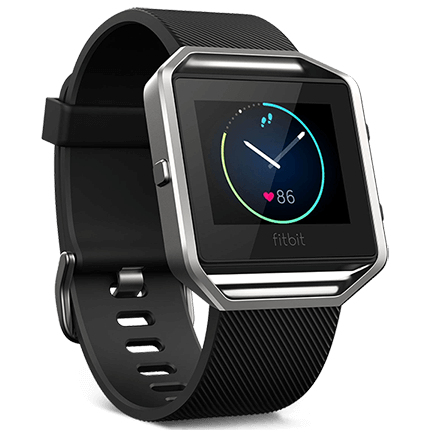
What else to look out for when choosing a fitness tracker:


Water resistance table for fitness trackers
There’s always a chance that you’ll run into expected rain when training outside. That's why most manufacturers include IP47 protection in their fitness trackers, which protects them from rain and dust.
| Designations | Degree of watertightness | Splashes, heavy rain | Showering, washing hands | Swimming, diving without breathing apparatus | Deepsea diving |
|---|---|---|---|---|---|
| Water resistant | 0 m | ✕ | ✕ | ✕ | ✕ |
| 3 ATM/ 3 BAR | 30 m | ✓ | ✕ | ✕ | ✕ |
| 5 ATM/ 5 BAR | 50 m | ✓ | ✓ | ✕ | ✕ |
| 10 ATM/ 10 BAR | 100 m | ✓ | ✓ | ✓ | ✓ |
| 20 ATM/20 BAR | 200 m | ✓ | ✓ | ✓ | ✓ |
| 30 ATM/ 30 BAR | 300 m | ✓ | ✓ | ✓ | ✓ |
| 50 ATM/ 50 BAR | 500 m | ✓ | ✓ | ✓ | ✓ |
| 100 ATM/100 BAR | 1000 m | ✓ | ✓ | ✓ | ✓ |

Smartphone connection
Some fitness trackers can connect to smartphones using Bluetooth technology and display notifications on the screen. Then you can see who is calling or writing you a text/ e-mail.

Overview of fitness tracker functions
Glossary - fitness trackers
GPS components
A device that receives a GPS signal to determine and record a location. There are GPS components in fitness trackers, car and motorcycle navigation systems, cycling computers and GPS locators.
Chest straps
Chest straps are used to measure heart rate when running and in other sports. They communicate wirelessly with the fitness tracker or the mobile app via Bluetooth. Measuring heart rate with the chest bands is suitable for those who want to have a detailed overview of their activity.
Foot sensors
A foot sensor attaches to an athlete's shoe. It comes as part of the package for fitness trackers without a GPS component. It measures distance and speed and needs to be calibrated before its first use. Its advantage is that it can be used outdoors but also (unlike a lot of fitness trackers) in the gym.
Heart Rate
Heart rate is the value of the number of contractions your heart makes per minute.
Interval training
A type of training that allows for the alternation between periods of high intensity exercise and rest. This is one of the most effective and, at the same time, most demanding training methods.
Bluetooth
Bluetooth is a standard for wireless communication connecting two or more electronic devices, such as tablets, mobile phones, headsetsvand more. Used to transfer audio, video and other files.
Degree of IP protection
The degree of protection (IP, Ingress Protection) is an internationally standardized code that indicates the resistance of electrical appliances to the ingress of foreign bodies and such as liquids and especially water. It is expressed in the so-called IP code, which consists of the characters "IP" followed by two digits: the first indicates protection against dangerous contact and the ingress of foreign objects, the second indicates the degree of protection against ingress of water.
Glossary
Display