
How to Choose a Shredder
Shredders can be very useful. They usually appear in every office and also in many households. They safely shred internal documents, and some can even shred DVD discs. We'll help you with choosing the right shredder that will suit your exact needs.
Tips for Choosing the Right Shredder
- When selecting a shredder, consider how often you'll be using it. Will you shred something only a few times a month or several times a day?
- For shredding ordinary documents, a classic strip-cut shredder will suffice. For shredding more security sensitive materials, go for a cross-cut shredder that shreds the paper to even smaller pieces.
- To save on time, consider of having the option of shredding 10 or more sheets at once, with higher speeds and a larger waste container.
- In addition to paper, more advanced shredders can cut CD/DVD discs, staples, paper clips and binder clamps.
- Where electricity isn't available, a manual shredder with a revolving crank will come in handy.
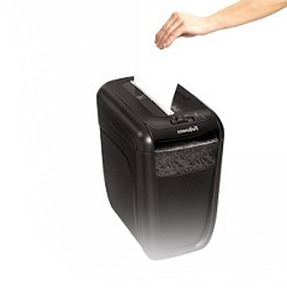
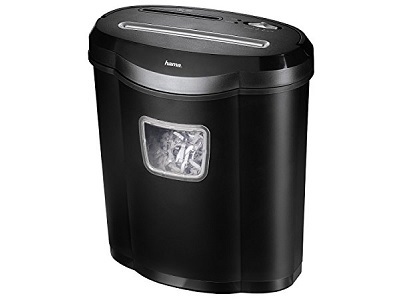
Shredders
Shredding devices provide an immediate way to shred any type of document. It can be one or more sheets of paper, and some can even handle CDs, DVDs and even binder clips. You can choose a device according to its security classification level for highly data sensitive documents. Electric shredders are easier to use, but the classic hand crank shredder might suit someone better.
Frequently Asked Questions in Regards to Choosing a Shredder
What is the difference between a strip-cut and cross-cut shredder?
Strip-cut shredders cut paper into long strips, with a width in accordance to the DIN 66399 classification system. The cross-cut is a more secure way of shredding because it cuts the paper in two directions crosswise. The shredded paper particles range from 320 to 30mm², depending on the degree of the security level. In some cases, it may also be the size set by the US government. In this case, the shredded particles reach a maximum size of 10mm².
Can you only shred paper, or other materials as well. And how fast?
While shredders may seem to be used only for paper, some devices shred other materials as well. These include paper clips, CDs and DVDs. Consider investing in a more efficient shredding device if this suits your needs.
When selecting a suitable shredder, be sure to check each shredder's speed. It's usually listed according to the shredded length of the papers in meters per minute.
What is the DIN classification, and how do I use it?
The DIN 66399 security classification level indicates how certain documents are shredded. For shredding ordinary documents, a basic strip-cut shredder with a P-1 level suffices. The width of each paper strip cannot exceed 12mm.
You'll find the DIN level on all shredders on our site. In addition to P-3 (P stands for paper), you may also see some marked with the DIN 3 level (which also refers to paper). The security classification level is usually found in the product description, and you might also encounter some levels marked with O- for discs and F- for analog films.
What's Important When Considering a Shredder?


Sheets Per Pass
The standard number of simultaneously shredded papers is about 5 sheets. However, most shredders are able to shred up to 10 sheets of paper or CD/DVD discs at a time. Some more advanced shredders can cut 15 or more sheets of paper at a time.

Shredding Rate
The shredding rate is one of the relatively neglected parameters. The right choice can save you time when shredding a lot of documents.

Type of Shredded Material and Size
Plenty of affordable basic shredders can shred not only A4 paper, but also staples or entire stacks of paper (if permitted by the sheets per pass). Some can even shred CDs, DVDs and plastic cards.
Common Materials Shredded:
The price varies when considering the material used for shredding, such as plastic cards, staples or even binder clamps. Some more expensive shredders do not cut these materials, but they do offer a cross-cut with a higher security level. On the contrary, other devices may only shred with a basic strip-cut, but it can cut more demanding materials, like staples and paper clips.

Waste Capacity
The size or volume of the waste basket is important, especially if you are shredding frequently, such as every day or several times a week. The larger the basket, the less you need to keep emptying it.

Electric vs. Manual Shredders
There a two types of shredders. The first is classic electric shredders, and the second, and less common, is manual shredders. The manual shredders usually use a crank.
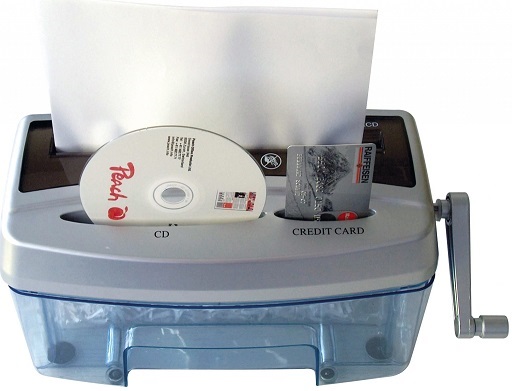 Manual Shredder with Crank
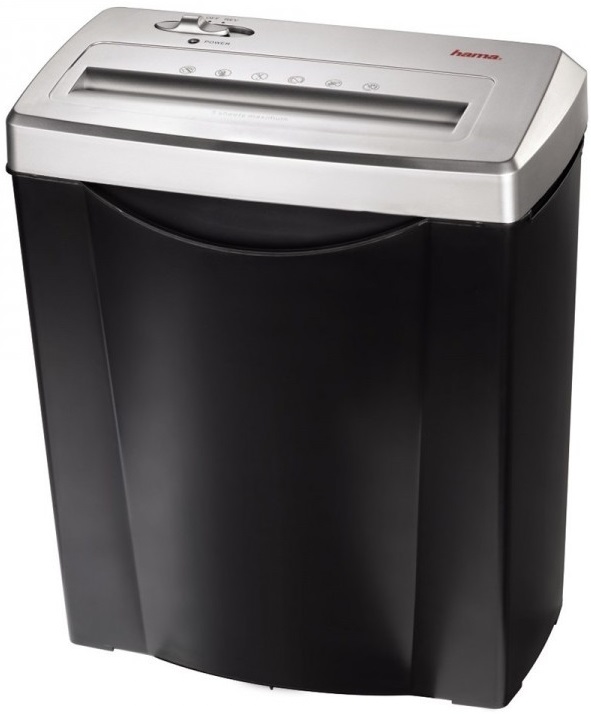 Electric Shredder
Glossary - Shredders
Type of Cut
There are two types of paper cuts for shredders. The first, is the basic strip-cut shredder. This type of shredder cuts the paper by having it pass through lengthwise, and then it's cut into long strips.
The second type is the cross-cut shredder, which is equipped with two cross blades that cut the paper in perpendicular directions. This method cuts paper particles and shredded material into much smaller pieces, which is safer in terms of security.
DIN Classification
DIN classification defines the maximum particle size of shredded material for a given security level. The higher the classification degree, the smaller the strips or particles of shredded material.
Maximum Shredding Capacity
This can also be referred to in the number of sheets and it's an indication of how much material can be shredded at the same time. Many manufacturers, however, indicate the weight of the paper (the weight of the paper per square meter) for this quantity. Generally, the lower the paper weight, the more sheets can be shredded.
Classification Security Levels
The classification security level is a basic parameter when selecting a shredder. Carefully consider the appropriate level according to your future use. These levels distinguish shredding for general information, internal documents, confidential documents to top-secret office documents conforming to US governmental standards.
The following table lists the classification levels for paper shredding from P-1 to P-6. With other media, such as CD discs or (analog) films, you may find that the security level classification doesn't always match with the paper document classification levels. At grade P-4 (secret documents), you may also encounter the shredding classification for CDs, O-3, and films, F-1.
Note that the cross-cut shows the size in mm² - this is due to the double blades that cut the paper against each other, which creates a space for the paper particles to pass through.