
RODE NTG2
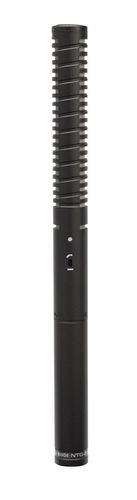
RODE NTG2
The NTG2 is a lightweight condenser shotgun microphone designed for professional use in film, video, television and broadcasting. Its full frequency response, low noise and audio transparency make it ideal for a range of applications, including filmmaking, voice-over work and streaming. It can be powered by either P48 phantom power or a replaceable AA battery for maximum flexibility in the studio or in the field. For added versatility, it is also equipped with a switchable high-pass filter.

Hot shoe
Microphone type
Condenser
Microphone principle
Highly directional
Polar pattern
20–20,000Hz
Frequency range
Key Features of the RODE NTG2 Microphone
- Premium dual-powered shotgun microphone
- Powered by P48 phantom power or an AA battery
- Low noise and full frequency response
- Highly directional polar pattern
- High-pass filter (80Hz)
- Lightweight and easy to use

Suitable for Camera and Video Production

Technical Specifications
- Acoustic Principle: Line gradient
- Active Electronics: JFET impedance converter with balanced transformer output
- Capsule: 0.50"
- Polar Pattern: Supercardioid
- Frequency Range: 20Hz–20kHz
- Output Impedance: 250Ω
- Maximum SPL: 131dB SPL
- Maximum Output Level: 6.9mV (at 1kHz, 1% THD into 1kΩ load)
- Sensitivity: -36.0dB re 1 Volt/Pascal (15.00mV @ 94dB SPL) +/- 2dB @ 1kHz
- Equivalent Noise Level (A-Weighted): 18dBA
- Power Requirements: AA Battery & P48
- Output Connection: XLR
Package Contents
- 1× RODE NTG2 Microphone
- 1× ZP2 large padded zip pouch
- 1× RM5 adjustable microphone clip
- 1× WSVM windshield
Microphone Principle
Dynamic microphones are suitable for open performances, live broadcasts, music production, etc. They use a magnet and a moving coil to capture sound.
Condenser microphones are mainly used for studio purposes. They have higher sensitivity and lower noise. They need to be powered separately.
Frequency Range
The frequency range indicates the range of frequencies that the microphone records. The wider the range, the more sounds it can capture.
Low frequencies (e.g. 20–200Hz): Bass, the deepest notes of instruments (double bass, kick drum) and male voices.
Mid frequencies (e.g. 200–3,000Hz): The body of instruments, the basis of the voice where the ear is most sensitive, important for speech intelligibility.
High frequencies (e.g. 3,000–14,000Hz): Treble, details, sibilance and the "shine" of the sound.
Air band (above 14,000Hz): Gives recordings a sense of expensive, super-high-quality sound and space.
Sensitivity
Microphone sensitivity is the ratio of the output voltage to the acoustic pressure. It expresses how loud a signal the microphone produces at a given acoustic pressure; higher sensitivity means a stronger voltage and is suitable for quiet studios, while lower sensitivity is better for noisy environments because it amplifies less unnecessary ambient noise.
Specifications
Connection
Microphone characteristics
Features
Dimensions
Weight
| Code: | ROD006d1 |
| Warranty: | 24 months |
| Links: | Producer's Website: |