
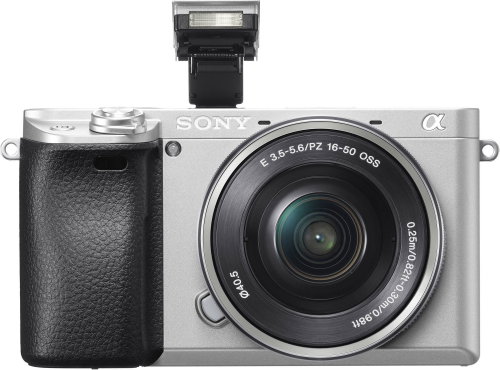
Sony Alpha A6300 Silver + 16-50mm Lens
Don't like the alternatives?
Choose from the full offer
Sony Alpha A6300 Silver + 16-50mm Lens
Put away your smartphone and take professional-quality shots with the Sony Alpha A6300 Silver + 16-50mm Lens mirrorless camera. The camera conceals a APS-C CMOS sensor. The Ultra HD (3840 × 2160) maximum resolution delivers top-notch photo and video quality. The sensor resolution is 24,2 Mpx, with a 3:2 aspect ratio. The camera includes a 3" screen with practical control elements used to switch between various camera features and change settings. All your images and videos are saved to a SD, SDHC, SDXC, micro SD, micro SDHC, micro SDXC and Memory Stick PRO memory card. The camera is powered by a battery. The camera can take up to 400 photos per one full charge.
Sony Alpha A6300 Silver + 16-50mm Lens Digital Camera Key Features
- The device is equipped with a electronic viewfinder provides a clear photo preview
- The camera suppports SD, SDHC, SDXC, micro SD, micro SDHC, micro SDXC and Memory Stick PRO memory cards with a capacity of 256 GB
- Includes a SONY 24,2 Mpx sensor
- Other handy features include automatic face detection
- The camera weights 404 g
- The camera has a rugged and durable body
- Capture videos in a Ultra HD (3840 × 2160) maximum video resolution
SONY Camera Design
The SONY digital camera with a weight of 404 g has dimensions 12 × 6,69 × 4,88 cm. On the front there is a bayonet mount with electronic contacts for attaching various lenses. Control elements aside, the camera also has a display and an electronic viewfinder. The device has a special accessory shoe for mounting an external microphone, flash, or other accessories. Another feature worth mentioning is the screw thread, which is good to have if you want to use a tripod, gimbal, or other accessories.
What Else Does the Sony Alpha A6300 Silver + 16-50mm Lens Camera Offer?
The SONY digital camera delivers a max ISO of 25600. If you want to shoot some videos, the camera can give you 30 frames per second with a Ultra HD (3840 × 2160) resolution. The camera also supports the continuous shooting mode with a maximum speed of 11 images per second. The customisable shutter speed from 1/ 4000 s to 30 s allows you to capture all kinds of scenes and objects. Video recordings include stereo audio.
SONY Digital Camera Formats and Interface Options
When capturing video, the device uses H,264/MPEG-4 AVC and AVCHD video codec. The photos are also saved in RAW format. All your photos are saved on the SD, SDHC, SDXC, micro SD, micro SDHC, micro SDXC and Memory Stick PRO type memory card with a max. capacity of 256 GB. You can also send your images via WiFi.
What Can the SONY Primary Camera Lens Do?
The camera comes with its own lens. The lens' focal coverage ranges from 16 to 50 mm, so it won't disappoint if you like capturing, for instance, reports, architecture, landscapes, or portraits. The lens delivers a lens speed of from f / 3,5 to f / 5,6 depending on the focal length. The maximum aperture limit is 36. If you want to zoom in, the lens has a minimum focus distance of 30 cm.
Specifications
Dimensions and weight
Type and function
Sensor
Video
Display
Memory and storage
Battery
Inputs and outputs
Package contents
Lens
| Code: | OS072i1k3 |
| Links: | Producer's Website: |
| Manufacturer information |
Sony Corporation is a Japanese company founded in 1946. Its headquarters is located in Tokyo. Its beginnings were humble. The first product sold under the Sony brand was a transistor radio. It was those radios that played a pivotal role in the company's expansion in the 1960s and the world quickly began to associate Sony products with a reliably stellar price-performance ratio. In the 1970s, Sony was severely affected by the global economic crisis. Many analysts considered the company effectively defunct and could see no future for it. However, they underestimated the famous Japanese perseverance and courage. The crisis was not a disaster for Sony; on the contrary, it served as a launching pad to even greater heights. The company recovered and soon changed the media landscape with the development of the CD and later the DVD. In the early 1990s, Sony achieved another major success with the introduction of the PlayStation gaming console. It is the gaming consoles that best represent the intersection of the three key areas in which the company operates today – electronics, video games, and the entertainment industry. 
|