
Reviews SAMSUNG WW90T534DAE/S7
Interested in reviews of SAMSUNG WW90T534DAE/S7? It got 4.6 out of 5 stars from our customers. Find specific customer reviews of SAMSUNG WW90T534DAE/S7 below. We will appreciate if you also share your experiences with SAMSUNG WW90T534DAE/S7 after purchasing.
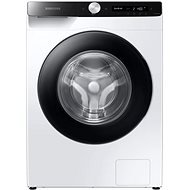
SAMSUNG WW90T534DAE/S7
Discontinued

Anonymous customer
Rated 21/11/2024, variant SAMSUNG WW90T534DAE/S7
Verified purchase
Washing machine: History, function and importance in modern society
The washing machine is one of the most important inventions that has profoundly influenced the daily life of modern man. This household appliance, now taken for granted, enables efficient laundry, saving time, energy and making life easier for millions of households around the world. In this paper, we will look at the history of washing machines, their technological development, principles of operation, different types and their importance today. History of the washing machine
The predecessors of washing machines
The history of laundry dates back to ancient times, when laundry was cleaned by hand in streams of water using primitive means such as stones or wooden spatulas. In Europe in the Middle Ages, the so-called. the valcha, a simple tool used to scrub clothes. Although these methods were physically demanding and time consuming, they represented the first attempts to make washing more efficient. The first mechanical washing machines
With the Industrial Revolution in the 18th century came advances in washing. The first mechanical washing machines were built around 1760. These machines were hand-powered and consisted of simple drums or barrels that agitated the laundry in water. The first patent for a washing machine was obtained in 1797 by the American inventor Nathaniel Briggs, although his design was very primitive. In the mid-19th century, washing machines with mechanical crank drives began to appear. These allowed for faster and more efficient washing than rolls, but still required manual labour. A significant advance was the introduction of the rotary drum washing machine, which was the basis of modern washing machines. Electric washing machines
The first electric washing machine was introduced in the early 20th century. In 1908, the American Hurley Machine Company launched a washing machine called "Thor", which had a drum driven by an electric motor. This washing machine revolutionised washing and gradually led to the mass production of similar devices. Throughout the 20th century, washing machine technology improved. New materials such as stainless steel and plastic were introduced and features such as spinning, automatic water filling and different washing programmes were added. The principle of operation of the washing machine
Modern washing machines are sophisticated machines that combine mechanical, electrical and electronic elements. The basic principle of operation of a washing machine involves several steps: Water filling: When the programme starts, water is filled into the drum. The temperature and water quantity can be adjusted according to the selected programme and the type of laundry. Adding detergent: Detergent is added automatically or manually to a special dispenser. It can be in the form of powder, gel or capsules. Mixing and washing: The drum begins to rotate, allowing the laundry and water to mix. The mechanical movement of the drum helps to remove dirt from fabrics. Centrifugation: After washing, the clothes are spun, which means that the high speed of the drum pushes the water out of the fabrics. Water discharge: The used water is discharged to waste. Automatic programs: Modern washing machines have built-in sensors that detect the weight of the laundry, the amount of dirt and optimise the washing process. Types of washing machines
Top-loading washing machines
Top-loading washing machines are particularly popular in North America. The laundry is inserted into them from the top, which allows for easier handling. They are suitable for smaller spaces and often have lower water consumption. Front-loading washing machines
Front-loading washing machines are common in Europe. Their advantage is better washing efficiency and lower energy consumption. Thanks to the transparent window, the washing process can be monitored. Combination washing machines with dryer
This type of washing machine combines washing and drying in one machine, saving space and making it ideal for households with limited space. Industrial washing machines
These washing machines are designed for commercial use, for example in laundries, hotels or hospitals. They have a higher capacity and higher power. The importance of the washing machine in modern society
The washing machine has become an indispensable device in everyday life. It saves time and energy, allowing people to focus on other activities. Thanks to technological advances, modern washing machines are more environmentally friendly - they use less water and energy. Automation of the washing process has also improved hygiene standards, which is particularly important in hospitals and the food industry. The future of washing machines
In the future, we can expect washing machines to be even smarter and greener. Models with features such as Wi-Fi connectivity, mobile app control and automatic detergent dispensing are already appearing. Another trend is the use of recycled water and energy-saving technologies. Conclusion
The washing machine is undoubtedly one of the key inventions of the modern era. It has come a long way from simple manual devices to sophisticated automatic machines. Thanks to constant technological development, it has become a symbol of comfort and efficiency in homes around the world. It is likely to become even more important in the future, especially with the emphasis on sustainability and innovation. Washing machines are fascinating devices with a long history and many interesting facts. Here are some interesting facts: The first electric washing machine: The inventor of the first electric washing machine was Alva J. Fisher in 1908. His model called "Thor" was powered by an electric motor and became a pioneer of modern laundry. Bubble technology: Advanced technologies such as Samsung's EcoBubble™ use bubbles to dissolve detergent and effectively wash even at low temperatures. This technology saves energy and protects delicate fabrics. Time saving: Previously, hand washing took several hours or even days. Today, the washing machine can complete a full wash cycle in less than an hour, which has dramatically changed the way we do things at home. The first automatic washing machines: Fully automatic washing machines appeared in 1937. They were capable of filling, washing, spinning and draining the water themselves, which was revolutionary at the time. Extreme capacity: Industrial washing machines in laundries and hospitals can wash hundreds of kilograms of laundry at a time, equivalent to hundreds of normal household loads. A space washing machine? NASA has been experimenting with washing machine designs for use in space because keeping clothes clean in weightlessness is a big challenge. Instead of water, they considered using a vacuum and steam system. Drum life: A drum in a washing machine usually rotates long enough in its lifetime to be equivalent to driving around the globe. Ecological impact: Modern washing machines use 70% less water and energy than those of the 1980s, reflecting advances in design and environmental awareness. Direction of performance: Different types of washing machines are more popular in different parts of the world - front-loading washing machines dominate in Europe, while top-loading washing machines are more common in North America. Historical names: The old washing machines had poetic names such as "Rocking Barrel" or "Gyro-Tub" to reflect their motion mechanisms. Washing machines are not only practical but also technologically advanced and interesting devices that have undergone a huge evolution from primitive rollers to today's smart models. Washing machine Samsung WW90T534DAE/S7: Detailed description
The Samsung WW90T534DAE/S7 is a modern front-loading steam washing machine that combines advanced technology with energy efficiency and simple operation. This washing machine is part of the WW5000T series and offers many innovative features to ensure quality and gentle laundry care. Main features and technologies
Capacity and design: The capacity of the drum is up to 9 kg, which is ideal for medium to large households.
Energy class A guarantees low energy (49 kWh per 100 cycles) and water consumption (50 litres per cycle)
SAMSUNG ALZA
.
Inverter motor: The digital inverter motor is quiet, efficient and has an extended service life. Samsung offers a 10-year warranty on the motor
HEUREKA ALZA
.
EcoBubble technology: This technology converts detergent into an active foam that penetrates deep into fibres even at low temperatures, saving energy and protecting delicate fabrics
HEUREKA
.
Hygiene Steam and steam washing: The steam cycle removes up to 99.9% of bacteria and allergens, making it suitable for allergy sufferers and those with sensitive skin. The steam penetrates deep into the fabrics, increasing the quality of the wash
SAMSUNG ALZA
.
Automatic dosing: The Auto Dispense function precisely dispenses detergent and fabric softener according to the amount of laundry, increasing washing efficiency and minimising waste
HEUREKA
.
AI Control: The washing machine has a smart control that learns from your washes and automatically recommends optimal cycles. It can be controlled via the SmartThings app, allowing for scheduling and remote control
HEUREKA ALZA
.
Cleaning and maintenance: Drum Clean+ technology removes 99.9% of bacteria from the drum and the StayClean Drawer prevents detergent residue build-up
HEUREKA
.
Washing programmes
The washing machine offers 22 programmes including a fast 15-minute cycle, a programme for bed linen, delicate fabrics, wool and Hygiene Steam. Programs are clearly displayed on the LED display
SAMSUNG ARECENZE
. Specifications and dimensions
RPM: Up to 1400 rpm. /min.
Noise: 53 dB when washing, 72 dB when spinning.
Dimensions: 60 × 85 × 55 cm.
Weight: 67 kg
ALZA ARECENZE
.
Benefits
High efficiency and low washing costs.
A wide range of programmes and smart features.
Elegant design and robust construction.
The Samsung WW90T534DAE/S7 washing machine is the ideal solution for modern households looking for a gentle, efficient and easy-to-use machine
0 ×Report
Automatic translation

Lukáš, Rýmařov
Rated 23/06/2024, variant SAMSUNG WW90T534DAE/S7
Verified purchase
super
0 ×Report
Automatic translation

Jiří, Letohrad
Rated 23/06/2024, variant SAMSUNG WW90T534DAE/S7
Verified purchase - review from a price comparison website
Fabric softener doses normally, only people are not normal. 3x does not mean more, but density. So you set the fabric softener dosage to the minimum! Is it a problem to read the instructions? It also says so in the mobile application.
Automatic dosing works as it should.
Mobile control probably too complicated for someone: D
A smart washing machine, but it' s not just for the stupid: D
Hope it lasts for the money
Absolutely great for a man, choose what you put in the washing machine: towels, T-shirts, socks, etc., and the washing machine itself will select the program according to how dirty it is, etc.
Bubbles and steam washing for heavily soiled laundry probably makes sense: )
They could stop giving the annoying right hand lock as an option altogether
The cleaning program cannot be started from the mobile phone, the application has an error and sometimes it even disappears on the washing machine.
0 ×Report
Automatic translation
Anonymous customer
Rated 16/06/2024, variant SAMSUNG WW90T534DAE/S7
Verified purchase
It washes well
You will receive a notification on your mobile phone
You can select a program on your mobile phone.
Quiet, does not hum, does not vibrate.
Socks get stuck between glass and rubber. wrong door angle
The music after washing is quite long but it doesn' t matter.
0 ×Report
Automatic translation
Jan, Cerhovice
Rated 15/04/2024, variant SAMSUNG WW90T534DAE/S7
Verified purchase
I've had it for a short time, but.
Quiet
Pleasant and easy to use
There are parts in the package that don't fit anywhere, no mention of this in the instructions
The buttons are not backlit, so you can't see where to put your finger in the dark
I would welcome a physical shutdown button
0 ×Report
Automatic translation

Tomáš, Hrušovany u Brna
Rated 01/04/2024, variant SAMSUNG WW90T534DAE/S7
Verified purchase
Lots of programs
Nothing
0 ×Report
Automatic translation

Božena, Ostrava - Polanka nad Odrou
Rated 31/03/2024, variant SAMSUNG WW90T534DAE/S7
Verified purchase
I have had this washing machine for a long time and I am happy with it.
0 ×Report
Automatic translation

Zbyněk, Praha 10 - Strašnice
Rated 30/12/2023, variant SAMSUNG WW90T534DAE/S7
Verified purchase
MEGA SATISFACTION
SILENT
FUNCTIONAL
SMOOTH OPERATION
RELIABLE
RIGHT
A SMALL MIRACLE FOR THE PRICE
we do not have the mentioned problem with the fabric softener (dosage)
I evaluate after one year of operation
runs almost daily (multiple family), really nothing to complain about
compared to the previous washing machine, expensive LG, is much better at half the price
0 ×Report
Automatic translation

Richard, Praha
Rated 19/10/2023, variant SAMSUNG WW90T534DAE/S7
Verified purchase
Review after two years of use. When purchased in 2021 the engine warranty was "only" 10 years, now I see they have increased it to 20.
Cleans laundry super
Large capacity, but that depends on the selected program
Automatic dosing of washing gel and fabric softener. I have never encountered it dosing poorly or not dosing at all. The batch size can be easily adjusted in the settings. Need to adjust the water hardness as well.
WIFI connection
Connecting to the phone and the internet
Starting the program remotely. You need to close the door and press the phone/remote access button, after which the door locks and can be accessed from anywhere.
If you have it connected to WIFI (internet) you get notifications
If connected to a phone, you can see the real power consumption
Resuming the programme after switching off and on again
Steam function
Small socks get stuck between the rubber and the glass of the door - so we use a bra bag for them
Child lock - its activation is via the menu of additional functions, which is not so bad, but it does not lock the button to turn off the washing machine. My son, after discovering it, happily switches off the washing machine even when the child safety switch is on
0 ×Report
Automatic translation

Václav, Louny
Rated 27/09/2023, variant SAMSUNG WW90T534DAE/S7
Verified purchase
Meets expectations
Design
Volume
Silence
0 ×Report
Automatic translation